The Color Mistake That's Making You Look Tired, Washed Out, and Ten Years Older
It's not your sleep schedule. It's that gray shirt. Here's the color theory most men have never considered—and why it matters more than fit.
You're not as tired as you look.
That's the first thing I want you to know.
When you catch your reflection and think "God, I look exhausted"—when people ask if you're feeling okay—when photos make you look like you've aged a decade since breakfast—
It might not be you. It might be the color you're wearing.
This is the style topic that men know the least about and that makes the biggest difference. Color. Not fit—we talk about fit constantly. Not quality. Color.
The wrong colors drain the life out of your face. They highlight every flaw, every shadow, every year you've been alive. They make healthy skin look sallow, bright eyes look dull, strong features look gaunt.
The right colors do the opposite. They bring warmth to your skin. They make your eyes look clearer. They subtract years without subtracting character.
Same face. Same man. Just different colors next to that face.
And most men have no idea this is happening.
Why Nobody Taught You This
Women know about color. It's considered basic knowledge—something you learn about in your teens, something you think about every time you shop.
Men? We got the message that color doesn't matter. That "matching" means not wearing brown with black. That everything else is overthinking it.
So we default to safe choices. Navy. Gray. Black. White. Earth tones. The neutral menswear palette that seems impossible to screw up.
But here's the problem: those safe choices aren't actually safe for everyone.
A gray that looks incredible on one man can make another look like he's recovering from food poisoning. A navy that sharpens one man's features can blur another's into mush. There's no universal "good" color—there's only what works for your specific coloring.
And if you've never thought about this, you've probably been wearing at least a few colors that actively hurt you.
The Three Things That Determine Your Colors
Your ideal colors come down to three factors:
Your skin's undertone (warm or cool)
This is the foundation. Underneath whatever shade your skin is—pale, medium, dark—there's either a warm undertone (yellow, golden, peachy) or a cool undertone (pink, red, bluish).
This is partly genetic and doesn't change with tans or seasons. Some people are clearly warm or cool. Others are closer to neutral but lean one way.
Your contrast level (high or low)
This is how much difference there is between your lightest and darkest features. Dark hair and light eyes? High contrast. Medium everything? Low contrast.
Contrast affects how bold your colors can be. High-contrast people can wear stronger colors. Low-contrast people get overwhelmed by them.
Your coloring intensity (muted or clear)
This is whether your features are vivid and saturated or soft and muted. Some people have eyes that pop from across the room. Others have features that blend more gently.
Intensity affects whether you want saturated colors or ones that are slightly grayed down.
These three factors combine to create your personal palette. And when you wear colors that match your palette, something clicks. You look healthier. More vibrant. More like yourself.
How to Figure Out Your Undertone
This is the most important one, so let's get specific.
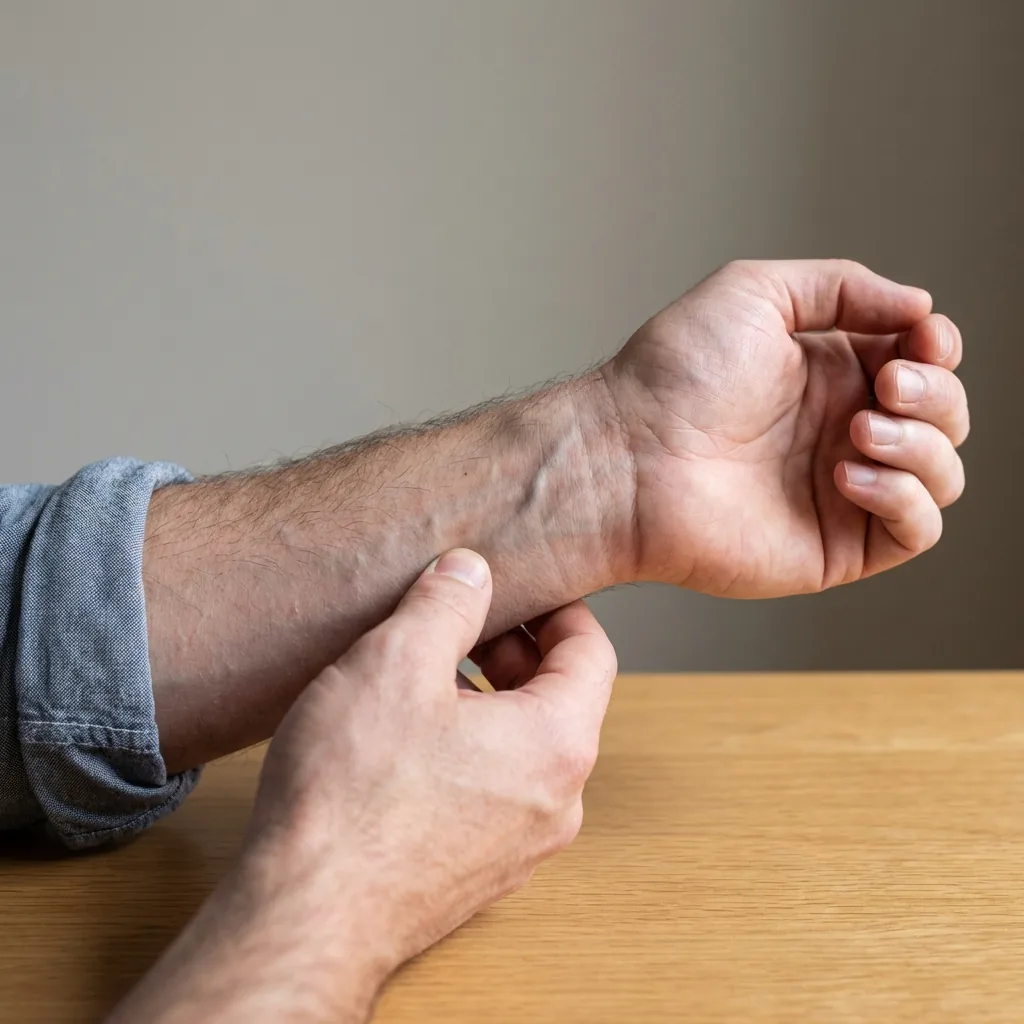
The vein test: Look at the veins on the inside of your wrist in natural light. Do they look more blue/purple? You're probably cool-toned. More green? Probably warm-toned. Can't really tell? You might be neutral.
The jewelry test: Does gold or silver look better against your skin? Gold typically flatters warm undertones. Silver flatters cool. If both work, you're likely neutral.
The white test: Hold a pure bright white shirt up to your face. Then hold an off-white or cream shirt. One of them will make your skin glow. The other will make you look slightly ill. If pure white works, you're cool. If cream works, you're warm.
The color drain test: Think about specific shirts you own. Are there colors that consistently get you compliments? Colors where people say you look healthy or rested? And colors that seem to drain you, even if the shirt itself looks nice on the hanger?
Your history tells you more than any test. Pay attention to what's already worked.
The Colors That Hurt Warm-Toned Men
If you have warm undertones and you're wearing these colors close to your face, you're actively sabotaging yourself:
Black: Pure black is too harsh for most warm-toned men. It creates a stark contrast that drains warmth from the face instead of complementing it. You might think you look sharp in black. You probably look severe.
Bright white: Same problem in reverse. Pure white washes out warm skin. It makes you look pale and tired. Cream, ivory, off-white—those work. Bright white doesn't.
Jewel-toned blues and purples: Royal blue, cobalt, purple, magenta—these cool colors fight against warm skin. They make warmth look like sallowness.
Anything with a blue or pink undertone: Light pink shirts. Blue-gray suits. Anything in the lavender family. These all compete with your skin instead of complementing it.
Stark gray: Light or medium gray with no warmth in it. On a warm-toned man, gray often reads as "I'm not feeling well today."
What warm-toned men should wear instead: olive, rust, camel, terracotta, warm brown, mustard, cream, coral, warm navy (with some depth to it), forest green. Colors that have yellow, orange, or red in their base.
The Colors That Hurt Cool-Toned Men
If you have cool undertones and you're wearing these colors, they're working against you:
Orange anything: This includes rust, terracotta, coral, peach. Orange is the hardest color for cool-toned people to wear. It makes you look flushed or jaundiced.
Yellow: Especially golden yellow or mustard. These bring out any redness in your skin while making the rest look green-ish.
Warm brown: Camel, tan, cognac, chocolate. These should work in theory—they're classic menswear colors. On cool-toned men, they look muddy and flat.
Cream and off-white: Where warm-toned men need these, cool-toned men should avoid them. They add a sickly warmth that clashes with your skin.
Olive: Another menswear staple that doesn't work for everyone. Olive on a cool-toned man often just looks dirty.
What cool-toned men should wear instead: pure white, light gray, charcoal, navy, burgundy, true blue, forest green (the cooler versions), plum, black (yes, you can actually wear black). Colors that have blue, purple, or pink in their base.
The Special Problem of Gray
Gray deserves its own section because it's the most common color in men's wardrobes and the most commonly wrong.
Gray comes in warm versions and cool versions. And if you're wearing the wrong one, you look terrible.
Warm gray: Has a brownish, taupe, or greige quality to it. Good for warm-toned men.
Cool gray: Has a blue or silver quality to it. Good for cool-toned men.
Neutral gray: Falls in the middle. Passable for most people, ideal for few.
Most off-the-rack gray suits and shirts are neutral-to-cool. This works for cool-toned men. For warm-toned men, it's a disaster. They put on a gray suit and look like they're about to throw up.
If you're warm-toned and you've always thought gray wasn't your color—you're half right. Cool gray isn't your color. But warm gray might look incredible on you.
This is the kind of nuance that changes everything once you see it.
The Contrast Question
Beyond undertone, there's contrast to consider.
High contrast: Dark hair (or bald head with dark features), light eyes or skin. Think: dark eyebrows against light skin, dark stubble against pale face.
Low contrast: Everything in a similar tonal range. Medium brown hair, medium skin, medium eyes. Nothing jumps out dramatically.
Medium contrast: Somewhere in between.
Why this matters:
High-contrast men can wear high-contrast outfits. Navy suit with white shirt. Black jacket with light background. The boldness matches their face.
Low-contrast men look overwhelmed by high-contrast outfits. They do better with tonal dressing—colors that are closer together in value. A medium blue jacket with a light blue shirt. Camel and cream. Olive and sage.
When you wear the wrong contrast level, your clothes either overpower your face (if you're low-contrast in high-contrast clothes) or look washed out compared to your features (if you're high-contrast in low-contrast clothes).
Putting It Together
Let me give you some real combinations.
The Warm, Low-Contrast Man:
- Best colors: olive, camel, rust, cream, warm browns, muted warm navy
- Best combinations: olive jacket with cream shirt, camel chinos with rust sweater
- Avoid: black, bright white, cool gray, bright jewel tones
The Warm, High-Contrast Man:
- Best colors: deeper warm tones—chocolate, forest green, rich burgundy, warm navy
- Best combinations: chocolate blazer with cream shirt, navy with camel
- Avoid: pastels, washed-out neutrals, anything too subtle
The Cool, Low-Contrast Man:
- Best colors: soft grays, muted navy, dusty blues, soft burgundy, medium charcoal
- Best combinations: light gray suit with white shirt, muted blue jacket with soft gray pants
- Avoid: high-saturation colors, anything too bold or stark
The Cool, High-Contrast Man:
- Best colors: pure white, black, bright navy, cobalt, true red, sharp charcoal
- Best combinations: black jacket with white shirt, navy with bright white, charcoal with burgundy
- Avoid: muted earth tones, anything brown or orange family, washed-out neutrals
The 80/20 Rule
You don't need to analyze every color you'll ever wear. Get clear on your undertone, figure out your contrast level, and use that to guide the colors you wear closest to your face—shirts, sweaters, jackets. Pants are more forgiving because they're further from your face.
The Photo Test
Want to see this in action? Try this.
Take photos of yourself in different colored shirts. Same lighting, same background, same expression. Just change the shirt color.
Then look at those photos side by side.
You'll see it immediately. In some photos, you look alive. Healthy. Present. In others, you look like someone photoshopped the life out of you.
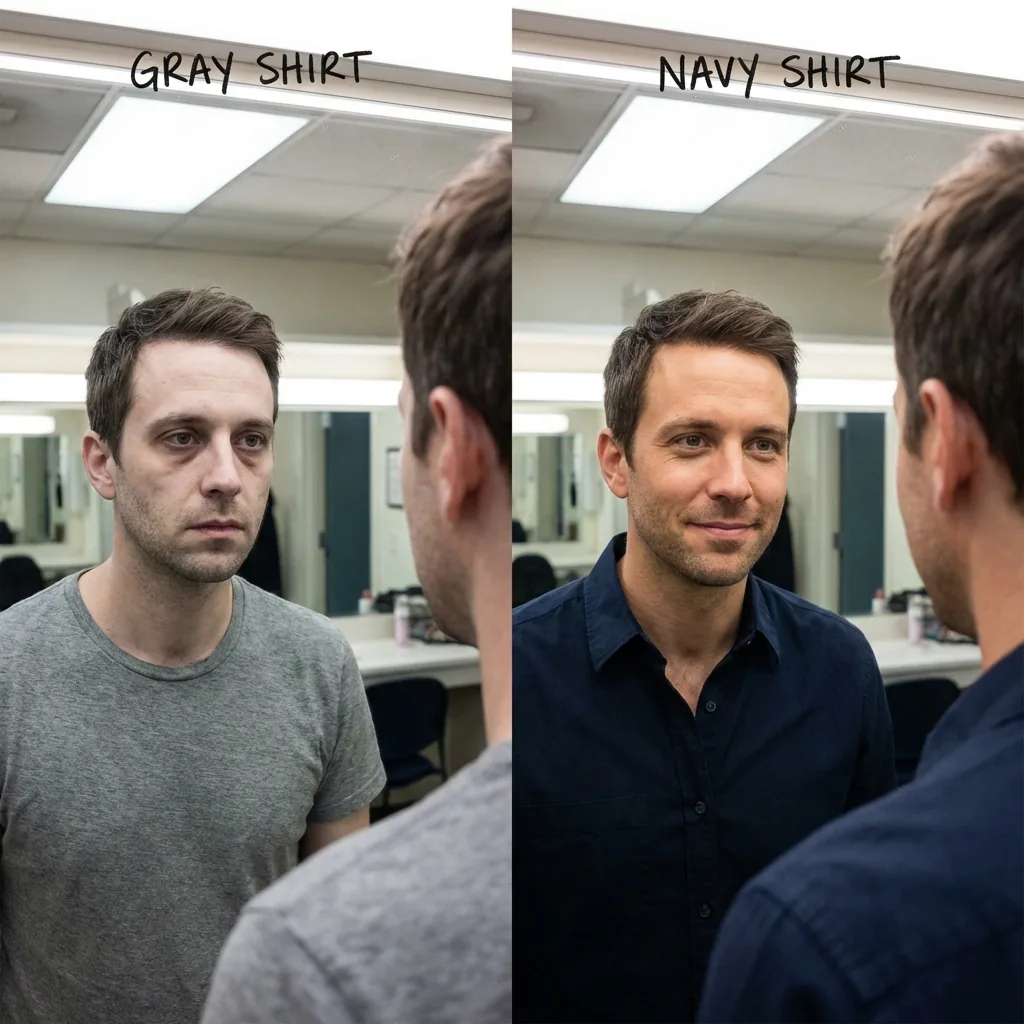
That's color. That's the only variable. And now you can never unsee it.
The Shopping Implication
Once you know your colors, shopping becomes dramatically easier.
You walk into a store. You scan the options. You immediately eliminate 50-60% of what's there because it's not in your palette. You're not guessing anymore. You're not hoping something works. You know.
This saves time. It saves money. It saves the experience of buying something, wearing it once, realizing it makes you look terrible, and shoving it in the back of your closet.
Most men have closets full of color mistakes. Shirts that looked good on the hanger but look wrong on their body. They think the shirt is fine and they're the problem. Usually it's the reverse.
The shirt is wrong. You're fine.
The Aging Factor
Here's one more thing to consider.
As you get older, your coloring changes. Your hair goes gray or white. Your skin loses some saturation. Your contrast levels shift.
Colors that worked for you at 30 might not work at 50. The bright colors that once looked vibrant might now look like they're wearing you. The stark contrasts that once looked sharp might now look harsh.
Most men over 40 need to adjust their palette slightly. Usually toward softer, more sophisticated tones. Less primary, more muted. Less stark contrast, more tonal harmony.
This isn't about dressing older. It's about dressing appropriately for your current coloring. A 50-year-old man with gray hair in a bright orange shirt doesn't look youthful. He looks like he's trying to look youthful, which is worse.
A 50-year-old man in colors that work with his current coloring looks vital. Put-together. Like he's paying attention. That reads as younger than any bright color ever could.
Starting Tomorrow
Here's what I want you to do.
Tomorrow morning, pay attention when you get dressed. Look at the color of your shirt against your face. Notice whether it makes you look healthy or drained.
Then sometime this week, do the photo test. Five different colored shirts. Same everything else. Look at the results.
If you find colors that consistently work, wear more of them. If you find colors that consistently hurt, stop wearing them—even if you like them, even if they're your "favorite."
Your favorite color means nothing if it makes you look sick.
This isn't about being precious or overthinking fashion. It's about information. Now you have information you didn't have before. Use it.
Want to know your exact color palette without the guesswork? That's part of what we figure out in the intake process. Photos tell me a lot about your coloring, and from there I can build you a wardrobe where everything works together—and everything works for you.
Find Your ColorsApply to be styled by me
Drop your info below and tell me what you're looking to achieve. I'll personally review your request and get back to you.
About the Author
Tess Gant
I help men over 40 rebuild their wardrobes and their confidence. No fluff, no judgment—just practical guidance that actually works. Whether you're recently divorced, back in the dating pool, or just ready to stop looking invisible, I've got you.
Learn more about my approachContinue Reading
More Articles
The Waiter Seated You in the Back. That Wasn't Random.
Restaurants, hotels, and stores are sorting you by appearance every time you walk in. You don't get to pick which category.
11 min readShe Swiped Right on the Other Guy. He Was Wearing Your Exact Outfit — It Just Fit.
Two men. Same outfit. Completely different results. The invisible difference that changed everything.
11 min readReady to Transform?
Look as Good as You Feel
Stop reading about style and start living it. Get your personalized wardrobe plan in 48 hours.
Get Your Reset — $397