The Bar Light Test: Why You Look Sharp at Dinner and Wrecked by Midnight
Your outfit looked great at 7pm. By 11pm, you look like you slept in it. Here's what's happening and how to fix it.
The night started well.
Dinner at 7pm. You walked in looking sharp. The shirt was crisp. The pants had a clean line. You caught a glimpse of yourself in the restaurant window and felt good.
Fast forward to 11pm. You're at the bar that was supposed to be "just one drink" but turned into three. You catch another glimpse of yourself—this time in the bathroom mirror—and the guy looking back is a disaster.
The shirt is wrinkled across the chest. There's a visible crease where you've been sitting. The collar has lost its structure. The pants have bagged at the knees. You look like you slept in these clothes instead of wore them.
What happened?
Four hours happened. And your clothes weren't built for four hours.
The Problem No One Talks About
Most men get dressed for the first impression. The moment they walk in. The initial scan when people decide if you look put-together.
Nobody thinks about hour four. Or hour six. But that's where most of the night actually happens.
Think about a typical evening. Dinner is structured—you're seated, you're performing "dinner mode," the lighting is flattering. But then you move to a bar. A club. A house party. Someone's rooftop.
The environment changes. The lighting gets harsher or more erratic. You're moving more, sitting on different surfaces, standing in crowds, potentially sweating. You're no longer in the controlled setting you dressed for.
And your clothes are failing every test that comes next.

What's Actually Happening to Your Clothes
Let me break down the deterioration.
Wrinkles from sitting.
Every time you sit, you create creases. At the waist where your shirt tucks. At the back of your thighs. At the knees. At the crook of your elbows if you've been leaning on the bar.
In the soft restaurant light, these creases were invisible. Under the fluorescent bathroom light at the bar, or the flash of someone's camera, they're all anyone can see.
Some fabrics hold up to this. Most don't.
Sweat and body heat.
Even if you're not visibly sweating, your body is producing heat and moisture all night. This breaks down cheaper fabrics. The shirt that felt structured at 7pm becomes limp by 11pm because the starch has broken down, the cotton has absorbed humidity, and the fabric no longer has any memory of what it was supposed to look like.
Movement and friction.
You've sat down, stood up, walked, danced, hugged people, squeezed through crowds. Every contact with a surface—a barstool, a wall, another person's jacket—transfers something or causes compression.
A fabric without recovery stays compressed. A fabric with recovery springs back.
Guess which one you're probably wearing?
The collar collapse.
Nothing screams "been out too long" like a collar that's given up.
A shirt collar is meant to frame your face. When it starts flopping, curling, or laying flat against your chest, you look disheveled. And this is almost entirely determined by the collar's construction and interlining—things you can't see when you buy the shirt.
Cheap shirts have thin, soft interlinings that wilt with heat and humidity. You're fine for two hours. By four, you're done.
The Fabrics That Fail
Let me tell you what not to wear if you're planning to be out past 9pm.
Pure cotton without structure.
Cotton is breathable and comfortable. It's also a disaster for long nights. It wrinkles immediately, absorbs sweat, and loses all shape within hours.
An oxford cloth button-down is great for Saturday errands. It's terrible for a date that might move from dinner to drinks to somewhere else.
Linen anything.
Linen is for sitting on a yacht in the Mediterranean looking intentionally rumpled. It's not for looking good at midnight.
Within an hour of wearing linen, you have visible creases. By hour four, you look like you wore it to bed last week. Linen's "relaxed" aesthetic only works if you never move, never sit, and have a photographer adding filters in real-time.
For an actual night out? Avoid.
Thin, unstructured anything.
The thinner the fabric, the less it holds its own shape. Those tissue-thin shirts that feel light and casual? They reveal every wrinkle, every sweat mark, every moment of friction.
They also show everything underneath them—not in a good way. That visible undershirt line, the outline of your belly, the shape of your chest hair. At 7pm in dim restaurant lighting, no one notices. At 11pm under harsher lights, everyone does.
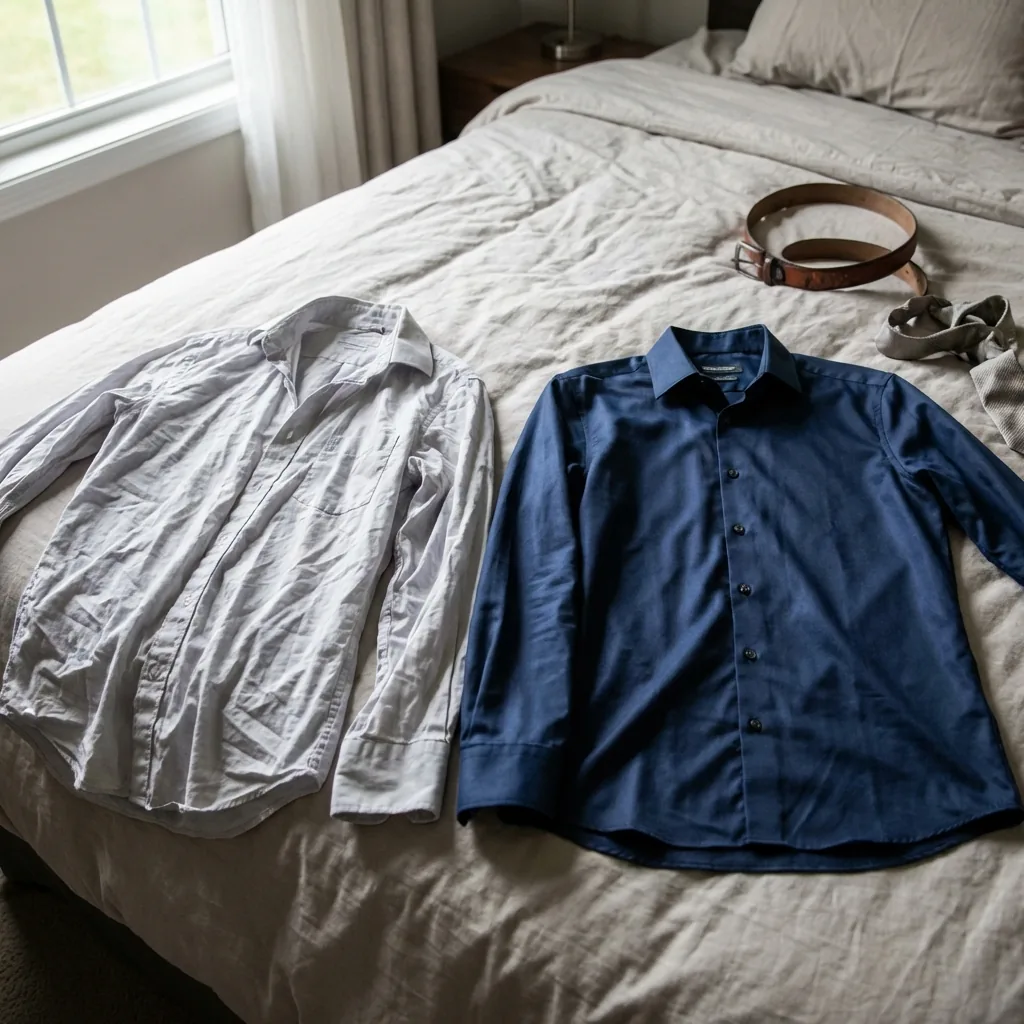
The Fabrics That Survive
Here's what actually works for the full night.
Performance blends.
I know. "Performance fabric" sounds like something your dad wears to golf. But modern performance blends are invisible—they look like regular cotton but have stretch, wrinkle resistance, and moisture-wicking built in.
Brands like Mizzen+Main, Ministry of Supply, and Rhone make dress shirts and casual shirts from technical fabrics that look traditional but survive a full night. You can sweat, sit, dance, and still look crisp.
The test: take the shirt out of the dryer. If it looks ready to wear without ironing, it'll last the night.
Wool or wool blends.
Wool has natural recovery. It resists wrinkles. It doesn't absorb sweat the way cotton does. It regulates temperature.
A wool or wool-blend trouser will look nearly as good at midnight as it did at dinner. The fibers spring back. The fabric moves with you instead of just crumpling.
This is why high-quality suits still look good after a 14-hour wedding. The wool is doing work that cotton can't.
Heavier knits.
A well-made polo or sweater in a medium-weight knit is more durable than a thin woven shirt.
The structure of the knit gives it resilience. It stretches instead of wrinkling. It hides small imperfections instead of broadcasting them.
A merino polo or a cotton-modal blend tee will outperform a cheap button-down every time over a long night.
The Construction Details That Matter
Beyond fabric, there are construction choices that determine if your clothes survive the night.
Collar stays.
If your shirt has a collar, it should have collar stays—the small pieces of plastic or metal that slot into the collar points to keep them from curling.
Removable stays are best because you can swap in stiffer ones for occasions that matter. Sewn-in stays are acceptable. No stays at all? That collar is going to curl like a dead leaf by 10pm.
Proper interlining.
A dress shirt collar's structure comes from the interlining—the layer between the outer fabric and the inner layer. Good shirts have fused or semi-fused interlinings that maintain shape. Cheap shirts have thin, floppy interlinings that give up when exposed to body heat.
You can't see this in the store. But you can feel it. Squeeze the collar between your fingers. Does it feel substantial and springy, or thin and limp? Buy accordingly.
Stretch panels.
Modern shirts and trousers increasingly include stretch panels—elastane or spandex woven into the fabric.
Stretch doesn't just add comfort. It adds durability. A fabric that stretches with your movement instead of fighting it creates fewer wrinkles. It returns to shape instead of staying compressed.
Two percent spandex in a cotton trouser is the difference between looking good after dinner and looking good after the after-party.
The Lighting Variable
I need to talk about light, because it's changing how you look all night—and you're not adjusting for it.
Restaurant lighting is designed to flatter. It's warm, dim, and diffused. It softens edges, hides wrinkles, minimizes imperfections. You look good because you're engineered to look good.
Bar lighting is chaotic. Some bars are dark. Some have harsh spots. Many have unflattering LED strips or colored lights that make skin look strange and amplify texture in fabric.
Bathroom lighting is the truth. Fluorescent or bright LED, straight on, no shadows. Every wrinkle is visible. Every stain pops. This is what everyone else sees when you're standing next to them in the real world.
Flash photography is the worst. Phone cameras use harsh, direct flash that adds contrast to everything. Wrinkles create shadows. Sweat reflects. Cheap fabric looks cheaper.
Your outfit needs to work in all of these conditions, not just the first one.
The Time-Travel Test
Here's the test I use with clients when we're building going-out wardrobes.
Put on the outfit. Sit down for 30 minutes. Stand up. Look at yourself. Is the back of your shirt still smooth? Are your pants still clean at the knee?
Then wear the outfit around your apartment for two hours. Do some dishes. Sit on the couch. Go up and down stairs. Check yourself again.
If the outfit still looks good after that, it'll survive a real night out. If it's already rumpled from walking to your kitchen, it was never going to make it to midnight.
The Practical Wardrobe
If you're a man who goes out—dates, dinners, drinks, events—you need clothes specifically for that purpose.
This isn't your everyday wardrobe. This is your after-dark wardrobe. Pieces chosen specifically because they survive the conditions you're putting them in.
The Night-Out Wardrobe
- 2-3 performance fabric shirts (moisture-wicking, wrinkle-resistant)
- 1-2 substantial polos or knit shirts (not thin cotton)
- 2 pairs wool or wool-blend trousers (dark colors)
- 1 versatile dark blazer in wrinkle-resistant fabric
- Collar stays in every shirt that takes them
That's not a big investment. Five to seven pieces. But those pieces earn their place because they're still working at midnight.
The Mindset Shift
Stop dressing for the first impression.
Start dressing for the last impression.
The moment people remember isn't always when you walked in the door. It's the end of the night—the goodbye, the after-party photo, the "let's get out of here" moment.
If you look wrecked by then, that's the version of you they'll remember.
But if you look as sharp at midnight as you did at 7pm? That's a man who has his life together. That's a man who plans ahead. That's a man who thought about the full experience, not just the first five minutes.
It's not vanity. It's strategy. And the men who understand this have an advantage the rest don't even see.
Not sure what pieces in your closet can actually survive a night out? A wardrobe audit identifies your best after-dark options—and what needs to be replaced with something that won't quit on you by 10pm.
Book Your AuditApply to be styled by me
Drop your info below and tell me what you're looking to achieve. I'll personally review your request and get back to you.
About the Author
Tess Gant
I help men over 40 rebuild their wardrobes and their confidence. No fluff, no judgment—just practical guidance that actually works. Whether you're recently divorced, back in the dating pool, or just ready to stop looking invisible, I've got you.
Learn more about my approachContinue Reading
More Articles
The Waiter Seated You in the Back. That Wasn't Random.
Restaurants, hotels, and stores are sorting you by appearance every time you walk in. You don't get to pick which category.
11 min readShe Swiped Right on the Other Guy. He Was Wearing Your Exact Outfit — It Just Fit.
Two men. Same outfit. Completely different results. The invisible difference that changed everything.
11 min readReady to Transform?
Look as Good as You Feel
Stop reading about style and start living it. Get your personalized wardrobe plan in 48 hours.
Get Your Reset — $397